Liên hệ với chúng tôi
Địa chỉ email của bạn sẽ không được công bố. Các trường bắt buộc được đánh dấu *

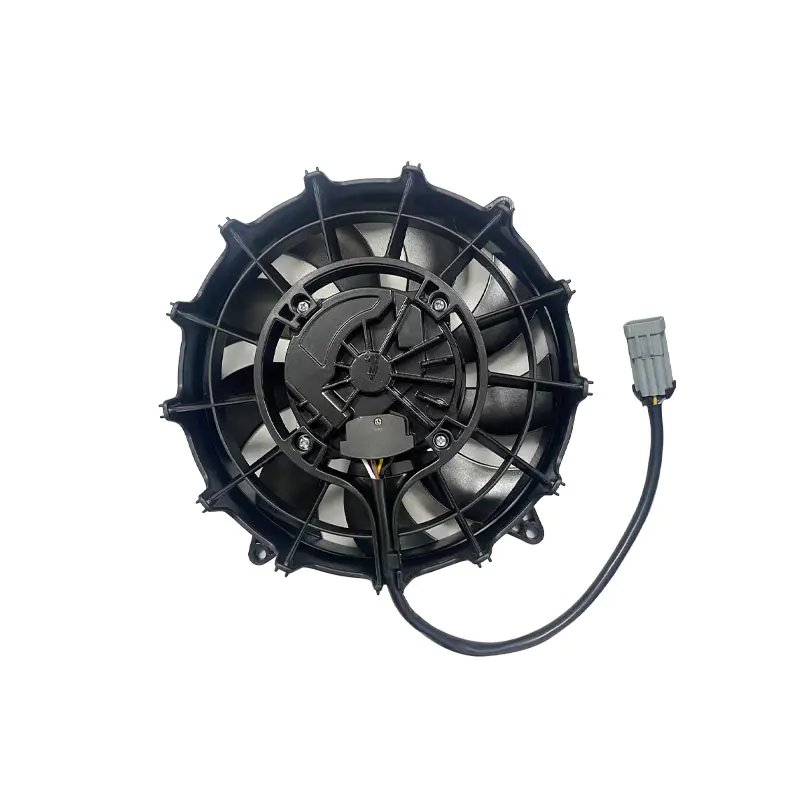
1. Optimize blade design to improve airflow efficiency
The blade design of DC brushless centrifugal fans is one of the core factors that determine heat dissipation performance. The shape, angle and size of the fan blades directly affect the air flow efficiency of the fan. To improve heat dissipation capacity, the blade design can be optimized from the following aspects:
Optimization of blade angle and number: The airflow output efficiency of the fan can be greatly improved by accurately designing the angle, number and spacing of the fan blades. The ideal blade design can reduce air flow resistance and vortex generation while ensuring the amount of air flow, thereby increasing the fan's air volume and pressure and enhancing heat dissipation performance.
Three-dimensional fluid dynamics analysis: Use CFD (computational fluid dynamics) analysis tools to simulate the air flow when the fan is running. These analyses can help designers more accurately determine the shape and layout of the blades and avoid deviation and instability of the airflow. By optimizing the design, the stability and efficiency of the airflow through the fan can be maximized, further improving the heat dissipation effect.
Use variable blade technology: For some environments with high requirements for heat dissipation, you can consider using variable blade technology. The fan blades can automatically adjust the angle according to the actual working conditions (such as temperature changes, load, etc.) to optimize the airflow and wind pressure to achieve the best heat dissipation effect.
2. Use advanced materials to improve thermal conductivity
The thermal conductivity of the material directly affects the heat dissipation effect of the fan. Therefore, choosing materials with excellent thermal conductivity is crucial to improving the heat dissipation capacity of the fan.
High thermal conductivity metal materials: In the key components of DC brushless centrifugal fans (such as blades, motor housings, bearing seats, etc.), the use of high thermal conductivity metal materials, such as aluminum alloys or copper alloys, can effectively improve the heat dissipation efficiency. These materials not only have good thermal conductivity, but also have light weight, which helps to reduce the overall mass of the fan.
Application of composite materials: For some special application scenarios, composite materials (such as carbon fiber composite materials) can be selected. These materials can provide sufficient strength and effective heat dissipation. The advantages of composite materials in heat dissipation and weight control make them an ideal choice for some high-end applications.
Surface treatment technology: By adopting surface treatment technology such as anodizing, chrome plating or thermal spraying, the thermal conductivity of the fan surface can be improved and the corrosion resistance of the fan components can be enhanced. This is particularly important for fans used in high humidity or harsh environments.
3. Improve the motor heat dissipation system
The motor of the DC brushless centrifugal fan is the core component of the fan. The heat dissipation performance of the motor directly determines the heat dissipation efficiency of the entire fan. By optimizing the motor heat dissipation system, the overall heat dissipation capacity of the fan can be significantly improved.
Improve the motor cooling design: Adopt the internal and external cooling duct design to quickly remove heat from the inside of the motor through a special channel. A reasonably designed ventilation path can effectively reduce the motor temperature and reduce the impact of overheating on the performance and life of the motor.
Use efficient coolant cooling: For applications that require higher heat dissipation efficiency, a liquid cooling system can be used. Add a coolant circulation system inside the motor housing to remove more heat through the heat conduction capacity of the liquid to ensure that the motor maintains a lower temperature when running at high load.
Optimize motor materials and structures: Select motor materials with stronger thermal conductivity to reduce heat accumulation inside the motor. At the same time, optimize the structural design of the motor so that the heating part of the motor is closer to the heat dissipation part, thereby improving the heat conduction efficiency.
4. Strengthen the heat dissipation capacity of the overall structure of the fan
The overall structural design of the DC brushless centrifugal fan also plays an important role in heat dissipation performance. The external structure of the fan should minimize the accumulation of heat and provide a smooth channel for air circulation.
Heat dissipation fin design: Adding heat dissipation fins to the fan casing or motor can greatly increase the surface area, thereby increasing the heat dissipation effect. The design of the heat dissipation fins needs to take into account the thermal conductivity, shape and arrangement of the material to maximize air flow and enhance heat dissipation.
Ventilation and heat dissipation hole design: Adding heat dissipation holes or ventilation holes to the casing and bottom of the fan can effectively help the hot air to be discharged and provide a channel for the cold air to enter. Reasonable hole position and aperture design can effectively improve air circulation and avoid heat accumulation.
5. Intelligent adjustment function and temperature monitoring
With the development of intelligent technology, the intelligent adjustment function of the fan has become one of the important means to improve heat dissipation efficiency.
Temperature sensor integration: Integrating a temperature sensor in the fan can monitor the temperature changes during the operation of the fan in real time. When the temperature is too high, the fan can automatically increase the speed to improve the cooling effect, or adjust the power output of the motor through the intelligent system to avoid overheating.
Automatically adjust the wind speed: Through the intelligent control system, the fan speed is automatically adjusted according to different load conditions. For example, when the load is low, the fan can automatically reduce the speed to reduce power consumption and noise; when the load increases, the fan will automatically increase the speed to ensure the cooling efficiency.
6. Reduce the impact of noise and vibration on heat dissipation
The noise and vibration of the fan will not only affect the user experience, but also may have a negative impact on the heat dissipation performance of the device. By optimizing the design and controlling vibration, the overall heat dissipation effect of the fan can be improved.
Optimize the balance of the fan: Ensure that the blades and motor bearings of the fan are accurately calibrated during the production process to reduce the occurrence of imbalance. Reducing vibration can not only reduce noise, but also avoid component loss caused by vibration, and ensure the stable operation of the fan.
Use shock-absorbing materials: Use shock-absorbing materials on the fan support and the connection between the motor and the fan to effectively reduce vibration transmission. This not only helps to improve the heat dissipation efficiency of the fan, but also prolongs its service life.
Địa chỉ email của bạn sẽ không được công bố. Các trường bắt buộc được đánh dấu *

Chiết Giang Nicety Electric Machinery Co., Ltd. chuyên sản xuất bốn dòng sản phẩm: quạt điện tử ngưng tụ, quạt tản nhiệt (bình nước), quạt gió và cụm điều hòa không khí. Sản xuất chuyên nghiệp quạt hướng trục ô tô DC thương hiệu Mỹ, Châu Âu, Nhật Bản, Hàn Quốc Và Nội Địa.
Email: [email protected] / huệ@zjnem.com
Tel: +86-0578-7125439 / +86 181 0658 9231
Address:Số 98, đường Quảng Đại, Khu công nghiệp Kim Sa, thành phố Long Tuyền, tỉnh Chiết Giang, Trung Quốc