Liên hệ với chúng tôi
Địa chỉ email của bạn sẽ không được công bố. Các trường bắt buộc được đánh dấu *

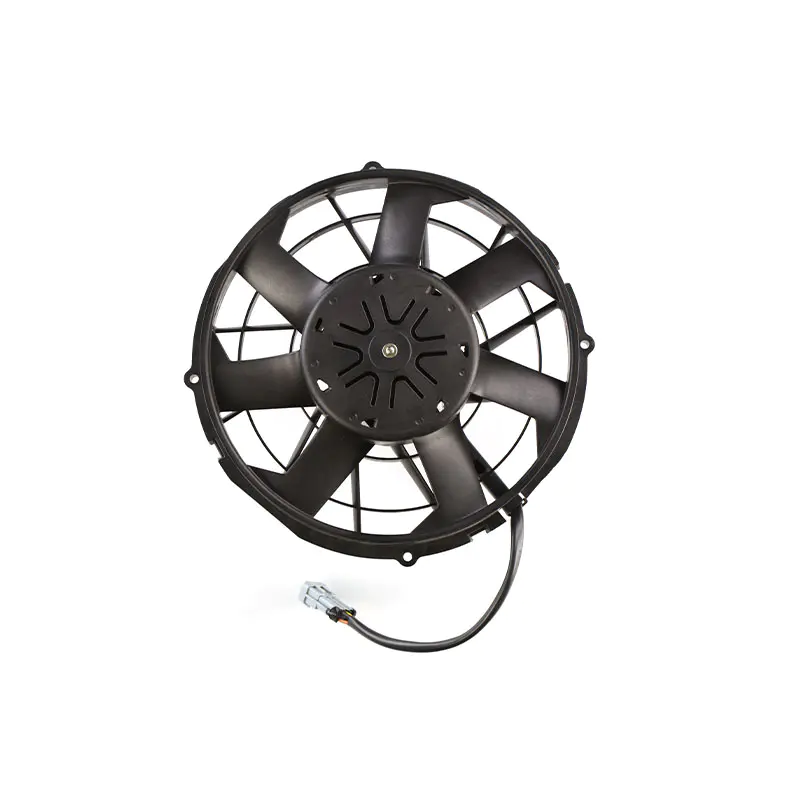
The core role of motor control technology
Motor control technology is the basis for Automotive DC Centrifugal fans to achieve stepless speed regulation and precise control. It involves a series of complex algorithms and electronic circuits for precise adjustment of motor operating parameters such as speed and torque. The core of this technology is to ensure that the fan can run at the optimal speed according to actual needs, maintain high efficiency and low noise.
1. Pulse Width Modulation (PWM) Technology
Pulse Width Modulation technology is a method of adjusting the average voltage of the motor by changing the pulse width. In DC centrifugal fans, PWM technology is widely used to achieve stepless speed regulation. By accurately controlling the width of the pulse, the speed of the motor can be smoothly adjusted to meet different cooling needs. The advantages of PWM technology are its wide speed regulation range, high accuracy, fast response speed, and effective reduction of energy consumption and noise.
2. Brushless DC Motor Control
Brushless DC motors are widely used in automotive DC centrifugal fans due to their high efficiency, long life and low maintenance cost. The key to controlling a brushless DC motor is to precisely adjust its input voltage and current to achieve the desired speed and torque. This is usually achieved through advanced motor control algorithms, such as vector control or direct torque control. These algorithms can monitor the motor's operating status in real time and dynamically adjust based on feedback signals to ensure that the fan operates in the optimal state.
3. Intelligent control algorithm
In order to further improve the speed regulation accuracy and system stability, intelligent control algorithms are widely used in the control system of automotive DC centrifugal fans. These algorithms can dynamically adjust the motor's control parameters based on real-time data to adapt to different operating conditions and load changes. Through predictive control algorithms, the fan's speed change trend can be predicted in advance and adjusted in advance to avoid overspeed or underspeed.
Key technologies for achieving stepless speed regulation
Stepless speed regulation means that the fan can smoothly adjust its speed within a certain range to adapt to different cooling needs. In automotive DC centrifugal fans, the key technologies for achieving stepless speed regulation include:
1. Variable frequency speed regulation technology
Variable frequency speed regulation technology adjusts the speed of the motor by changing the power supply frequency of the motor. In automotive applications, this usually involves converting the battery's DC power into AC power and adjusting its frequency through a frequency converter. As the frequency changes, the motor's speed will also be adjusted accordingly, thus achieving stepless speed regulation. The advantages of variable frequency speed regulation technology are its wide speed regulation range, high precision, and effective reduction in energy consumption and noise.
2. Microcontroller (MCU) control
Modern automotive DC centrifugal fans generally use microcontrollers as control centers. MCUs are able to receive real-time data from sensors, such as temperature, humidity, and wind speed, and process and make decisions based on preset algorithms. By accurately controlling the input voltage and current of the motor, MCUs are able to achieve stepless speed regulation and precise control of the fan. MCUs also have fault detection and protection functions, which can monitor the operating status of the fan in real time and take timely measures in the event of a fault to ensure the safe and stable operation of the system.
Methods for accurately controlling the fan speed
In order to achieve precise control of automotive DC centrifugal fans, a series of measures need to be taken to ensure that the fan speed can stably and accurately reach the preset value.
1. Closed-loop control system
The closed-loop control system is the key to achieving precise control. It monitors the fan's speed and torque and other parameters in real time, compares them with the preset values, and then adjusts them according to the error signal. This system can automatically compensate for the impact of external interference and internal changes on the fan speed, thereby ensuring the stable operation of the fan.
2. Sensor technology
Sensors are an important tool for achieving precise control. In Automotive DC Centrifugal fans, commonly used sensors include speed sensors, temperature sensors, and humidity sensors. These sensors can monitor the fan's operating status and environmental parameters in real time and feed the data back to the control system. The control system makes decisions and adjustments based on these data to achieve precise control of the fan.
3. Software algorithm optimization
In order to achieve higher control accuracy and stability, the control software needs to be continuously optimized. This includes improving the control algorithm, increasing data processing speed and accuracy, and enhancing the system's anti-interference ability. Through continuous optimization and improvement, the control performance and stability of automotive DC centrifugal fans can be further improved.
Địa chỉ email của bạn sẽ không được công bố. Các trường bắt buộc được đánh dấu *

Chiết Giang Nicety Electric Machinery Co., Ltd. chuyên sản xuất bốn dòng sản phẩm: quạt điện tử ngưng tụ, quạt tản nhiệt (bình nước), quạt gió và cụm điều hòa không khí. Sản xuất chuyên nghiệp quạt hướng trục ô tô DC thương hiệu Mỹ, Châu Âu, Nhật Bản, Hàn Quốc Và Nội Địa.
Email: [email protected] / huệ@zjnem.com
Tel: +86-0578-7125439 / +86 181 0658 9231
Address:Số 98, đường Quảng Đại, Khu công nghiệp Kim Sa, thành phố Long Tuyền, tỉnh Chiết Giang, Trung Quốc